
Why Consumer-Grade Wi-Fi Is Quietly Hurting Your Business Productivity
The Standard Office Frustration
It is a scenario played out in countless professional offices: an employee sits down for an important video conference, only for the feed to freeze up mid-sentence. Someone in the next room clicks print on a massive PDF manual, and suddenly the entire office’s internet speed grinds to a painful halt.
Often, the business owner blames the internet service provider (ISP) and upgrades to a pricier monthly speed tier, only to find the exact same dropouts and lag continuing a week later.
The problem almost never lies with the incoming internet line. Instead, it is almost always caused by running a professional workspace on consumer-grade networking hardware.
The Technical Reality of Home Routers
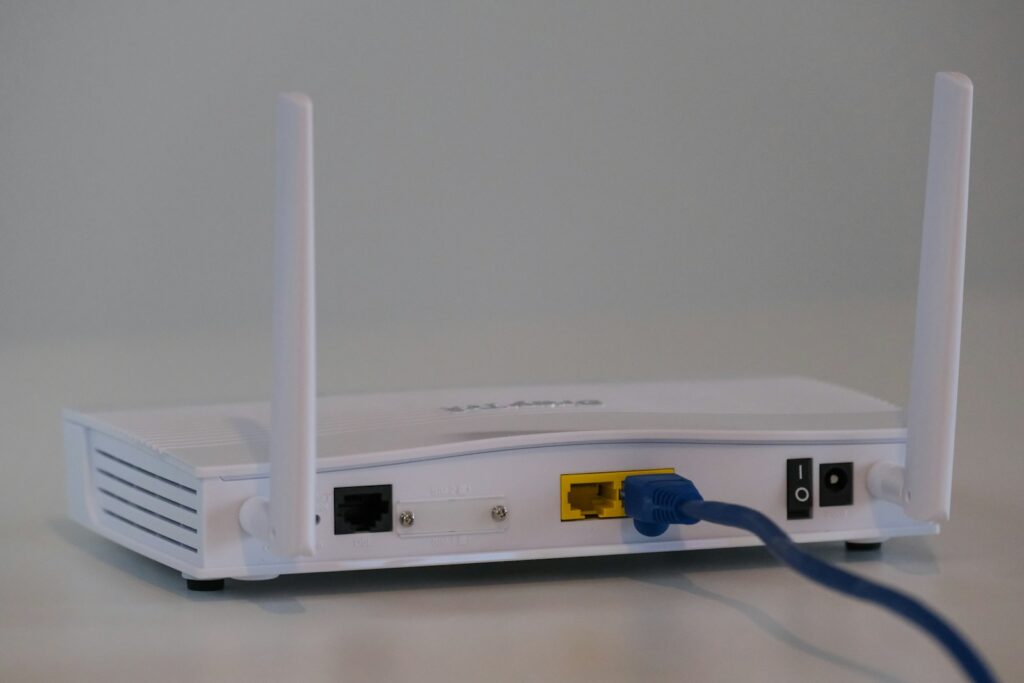
Consumer wireless routers—the kind bought at local big-box retail stores—are engineered for simple residential environments. They are designed to handle a handful of devices streaming video or browsing the web over a short distance.
When placed in a commercial environment, home routing hardware quickly collapses under the unique demands of a business:
- Device Exhaustion: A standard home router struggles to maintain stable connections once it encounters 20 or more active wireless devices simultaneously. When you factor in employee laptops, smartphones, desk tablets, smart TVs, network printers, and VoIP office phones, a consumer router quickly becomes overwhelmed and begins dropping devices entirely.
- Physical Obstructions: Modern commercial buildings use heavy materials like steel framing, thick drywall, or masonry walls. Consumer routers lack the transmission power to cleanly penetrate these barriers, resulting in frustrating “dead zones” in back offices or conference rooms.
- Lack of Traffic Control: Without a way to prioritize traffic, a consumer router treats an employee downloading a massive, low-priority archive file exactly the same as a critical, real-time business phone call.
The Enterprise Approach
Transitioning to a professional, enterprise-grade network architecture completely shifts how a business operates. By utilizing dedicated, hardware-managed access points and smart routing consoles, an office gains immediate infrastructure benefits:
- Seamless Roaming: Multiple discrete access points can be placed strategically throughout the workspace, allowing employees to walk from the reception desk to a back warehouse without their laptops dropping the connection for even a second.
- Intelligent Bandwidth Allocation: Quality of Service (QoS) rules can be established so that critical office traffic—like credit card processing and video communication—is always pushed to the front of the line, keeping the business moving flawlessly regardless of network load.
- Long-Term Hardware Reliability: Commercial networking gear is built with heavy-duty internal cooling and enterprise processing power, designed to run under heavy loads for years without ever needing to be manually unplugged and rebooted to “fix the internet.”
Investing in Uptime
Network infrastructure is the invisible backbone of modern business. Upgrading from basic consumer hardware to structured, professional network architecture eliminates daily friction, protects data, and ensures employees stay focused on their actual work rather than troubleshooting the Wi-Fi.